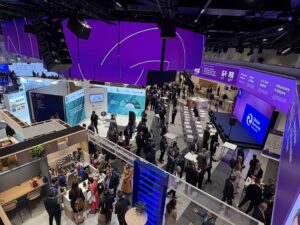
The 6th EPP FMCG/CPG RGM Forum Europe, held in London in May 2026, brought together more than 250 leaders from across the industry for two days of discussion on the future of Revenue Growth Management.
What emerged from the room aligned with what is showing up across the industry more broadly: the commercial challenges of 2026 are no longer analytical. Most organisations already have more data, more models, and more insights than ever before. The challenge lies in turning those insights into decisions, embedding them into commercial systems, and ensuring they continue to create value long after the initial project is complete.
Five themes consistently surfaced across the forum.
1. From Price-Led Growth to Volume Worth Having
The widening gap between volume performance and margin performance framed almost every discussion at the forum. After several years in which price increases successfully offset inflation and protected profitability, that mechanism has largely run its course. Consumers are returning to value alternatives, private label, and category reduction. The elasticity that appeared dormant has returned.
As a result, the industry is moving beyond a growth model primarily driven by pricing. The challenge is no longer how much price can be taken, but how to generate profitable and sustainable demand.
Several speakers described this shift as moving toward “volume worth having”: demand that creates long-term value rather than simply rebuilding volume or relying on further pricing actions.
The next phase of FMCG growth will be driven by smarter portfolio, pricing, promotion, and assortment decisions that balance volume, value, and profitability rather than optimising any one metric in isolation.
2. The Real Gap Is Decision Adoption, Not Analytics
Over the past three years, FMCG organisations have dramatically improved data availability and analytical sophistication. Yet decision quality and speed have not improved at the same pace.
Across multiple sessions, a common pattern emerged: organisations are generating more insights than ever, but too few are consistently translated into commercial action. The challenge is no longer insight generation. It is execution, adoption, and decisioning.
Pricing recommendations that arrive after the decision window, dashboards that require interpretation, and analytics disconnected from commercial workflows all contribute to what many participants described as the “last mile” problem of RGM.
The organisations making progress are redesigning not only analytics, but the way decisions are embedded into commercial processes, workflows, and frontline execution.
3. RGM Scales Through Repeatable Commercial Systems
One of the clearest conclusions from the forum was that successful RGM transformation is not about deploying more tools or running more pilots. It is about creating repeatable systems that scale consistently across markets, categories, and teams.
Consumer insights, trade reality, financial outcomes, and commercial execution must operate as one connected system rather than as separate functions.
This is why so many RGM programmes stall after initial success. The issue is rarely proving value. The issue is making value repeatable.
The future belongs to decision-centric operating models where insights, processes, governance, and execution are designed as one integrated system.
4. Agentic AI Requires Empowerment, Governance and Human Oversight
The discussion around AI was notably more mature than in previous years. The organisations making the greatest progress are not those deploying the most sophisticated models. They are those building commercial systems where AI recommendations can be trusted, adopted, and acted upon.
The shift underway is from centralised RGM expertise toward AI-enabled decision support available directly to frontline commercial teams.
At the same time, participants consistently emphasised the importance of disciplined use cases and human oversight. Not every commercial problem requires AI. Precision only creates value when it improves decisions.
The emerging model is therefore not autonomous decision-making, but AI-powered frontline empowerment with humans remaining firmly in the loop.
5. Always-On Execution Starts with Trusted Data Foundations
The commercial advantage of the next decade will not come from producing better analyses during annual or quarterly planning cycles. It will come from the ability to continuously sense, decide, and act in-market.
AI-powered commercial execution is compressing decision cycles from weeks to hours.
However, this capability rests on a prerequisite repeatedly highlighted throughout the forum: a unified and trusted commercial data foundation. Without a scalable data model, neither advanced analytics nor AI agents can operate effectively at scale.
The organisations creating competitive advantage are not waiting for perfect data. They are building strong data foundations while simultaneously driving adoption, execution, and organisational momentum.
Five Themes. Two Days. One Organising Conclusion.
The commercial gap in FMCG is no longer analytical. It is architectural, operational, and organisational. The conversation has shifted from building better models to building better systems that drive decisions at scale. The organisations that will lead by 2030 are already building integrated commercial systems that turn insight into action and action into continuous execution.
Discover the event.